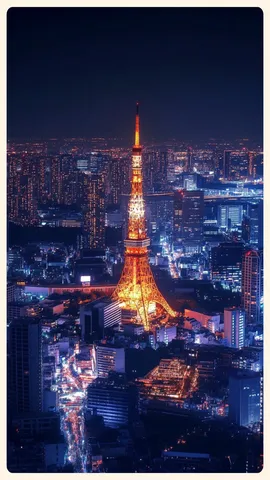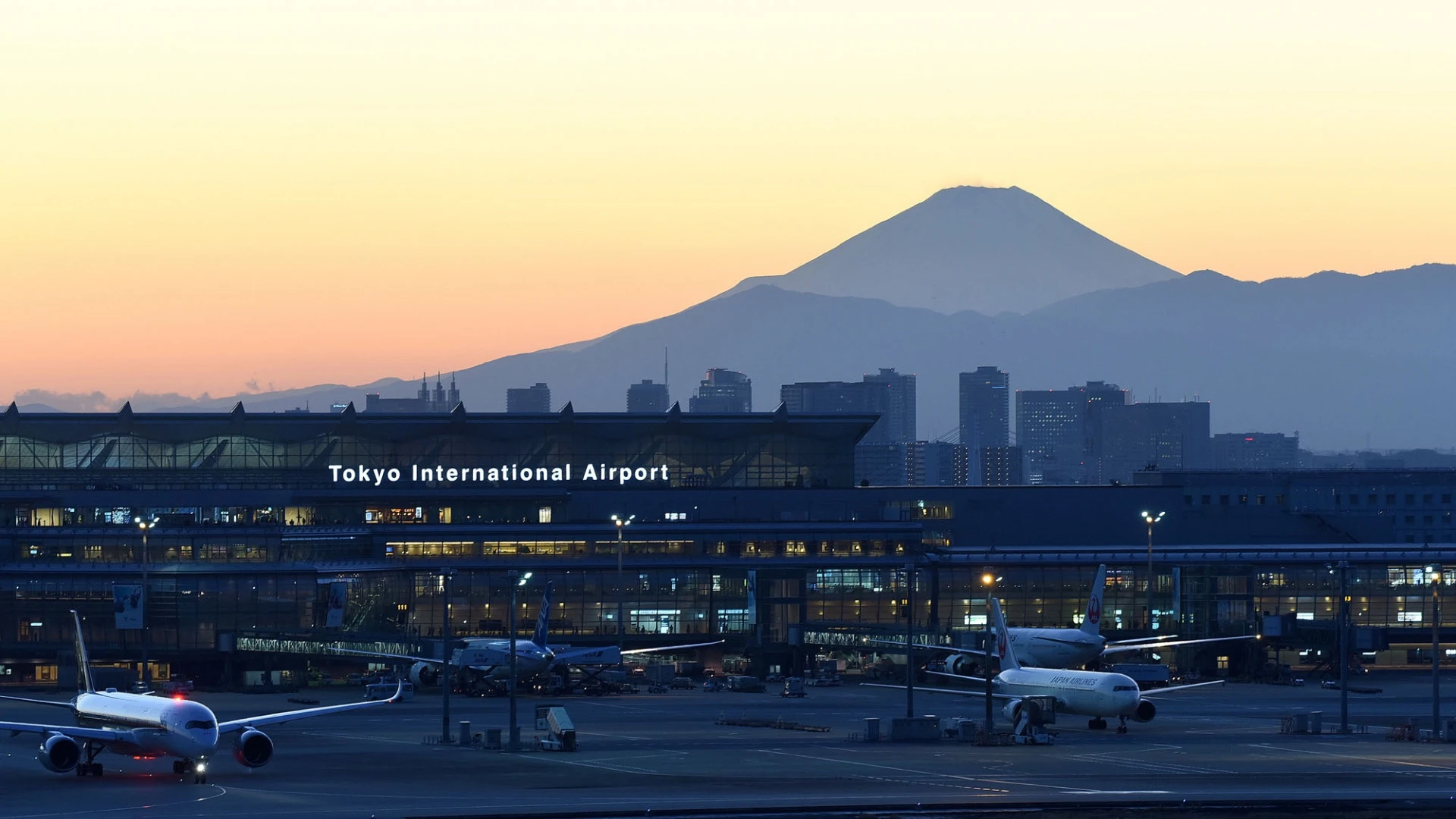
Tokyo does not treat aviation as logistics. It treats it as hospitality.
Between Haneda and Narita, over a hundred million passengers flow through Tokyo every year. Yet, the defining characteristic is not scale. It is an absolute, uncompromising dedication to precision. Every interaction — from the white-gloved ground crew to the frictionless immigration queues — is engineered to remove anxiety from the traveller.
If you are connecting through Asia and have a choice, route through Tokyo. Not because it is the most glamorous transit hub. Because it is the most respectful one.
Other airports move passengers.
Tokyo airports honour them.
Design must serve a purpose, but it should also ground you in a place.
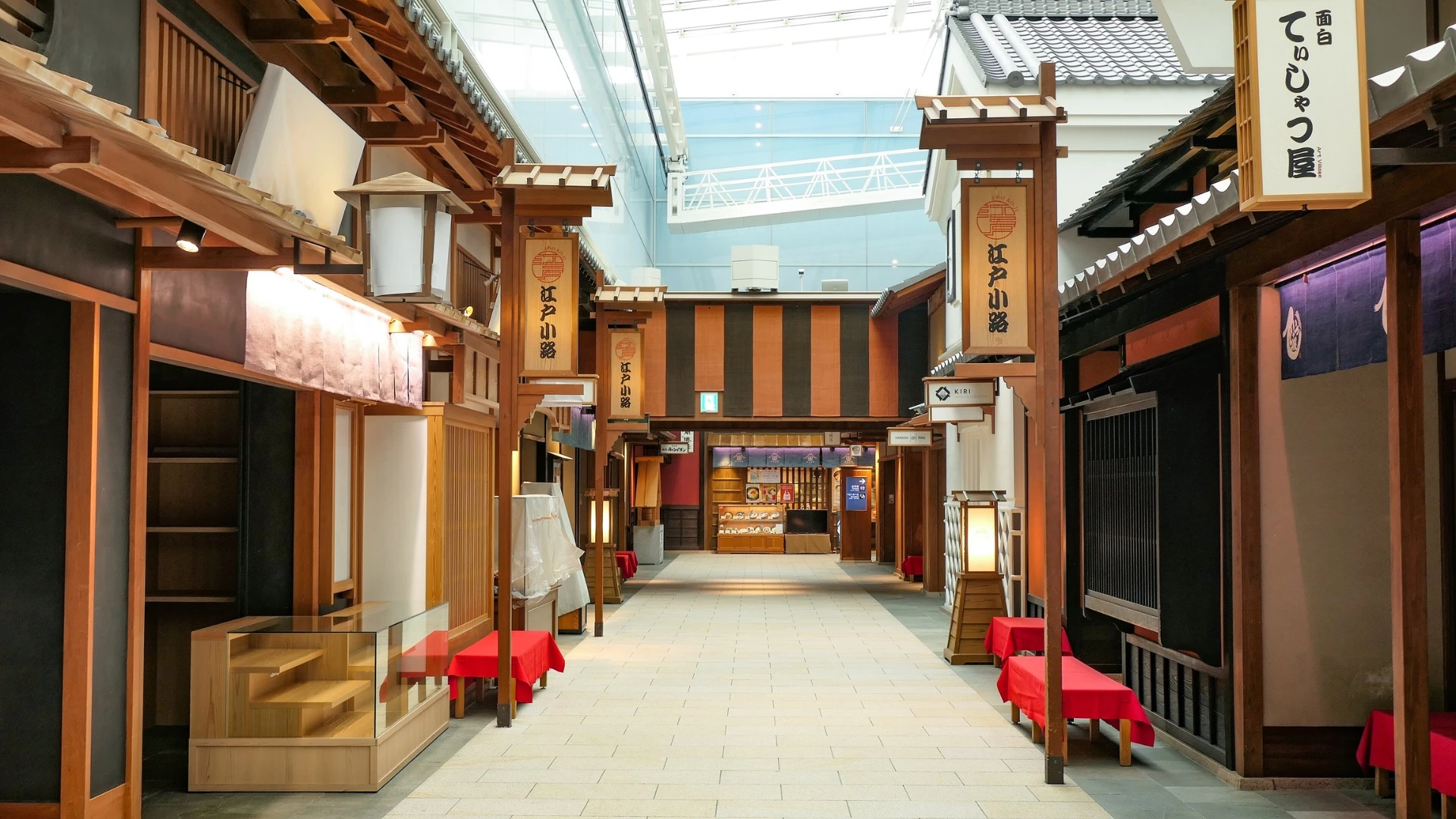
Haneda Terminal 3 is the international showcase. The fourth floor is Edo Koji — a meticulous recreation of an Edo-period street. It is not a theme park. It is a functional culinary district serving hand-cut soba and made-to-order tempura, pouring sake selections that rival the best bars in Ginza, and staying open until the final departure.
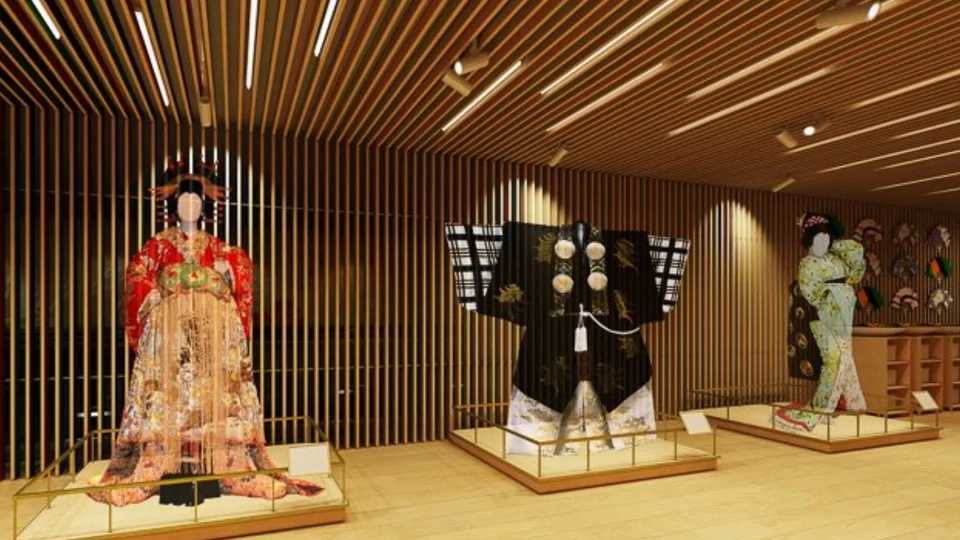
Narita, the long-haul gateway in Chiba, counters with sheer cultural preservation. Terminal 1 houses a kabuki gallery. Mannequins in full stage costume stand behind glass, lit with museum-grade precision. The red silk of the onnagata, the black armour of the samurai — each hand-stitched, each treating the terminal as a legitimate cultural institution. Japan is telling you, before you have even cleared customs, that you have arrived somewhere that takes its craft seriously.
Both airports share one quiet obsession: immaculate maintenance. The restrooms at Haneda are cleaned every fifteen minutes. It is a level of civic care that ruins you for anywhere else in the world.
The standard airport food model is built on captive compromise. Tokyo rejects this entirely.
The rule here is simple: eat before you fly. The food is not airport food; it is authentic Tokyo dining operating at terminal scale. At Haneda Terminal 3, Rokurinsha serves tsukemen — thick noodles in a dense, masterfully reduced fish-pork broth. You will queue for it, and you will not mind. At Narita, the Terminal 1 basement is an exercise in flawless efficiency. Ippudo executes perfect tonkotsu ramen. Yoshinoya serves gyudon at four in the morning. Even the curry house plates katsu curry with a geometric precision that looks machine-made, but tastes strictly artisanal.
Before your gate, find a kissaten — a traditional Japanese coffee house — in Haneda. They pour by hand, one cup at a time, through a flannel filter. Four minutes of analogue perfection in a high-speed world.
The most powerful amenities are designed for those who know where to look.
The ultimate luxury is arriving unburdened. The Takkyubin luggage delivery service allows you to drop your bags at a terminal counter for fifteen dollars, seamlessly routing them to your hotel by evening. You walk onto the Tokyo streets with nothing but a carry-on.
When you need to reset, both Narita and Haneda offer pay-per-use shower suites — thirty minutes of absolute privacy, hot water, and immaculate amenities. For deep rest, Narita Terminal 2 houses the Nine Hours capsule hotel. Minimalist, white fibreglass sleeping pods available by the hour. It looks like science fiction; it sleeps like a sanctuary.
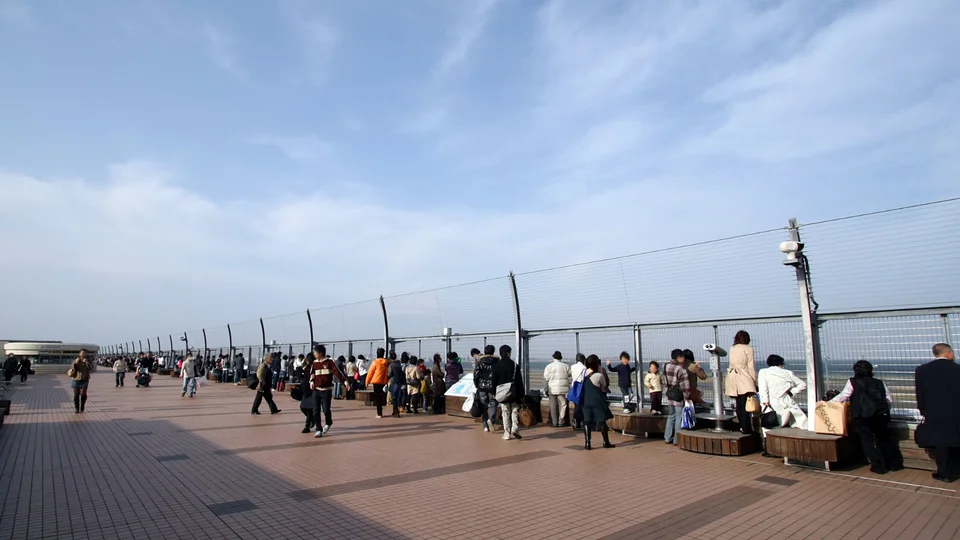
For the aviation purist, Haneda Terminal 2 hides an open-air observation deck on the fifth floor. Unobstructed views of the Tokyo skyline and heavy aircraft rotations, free and open until ten at night.
A layover should not be an endurance test. It should be a feature.
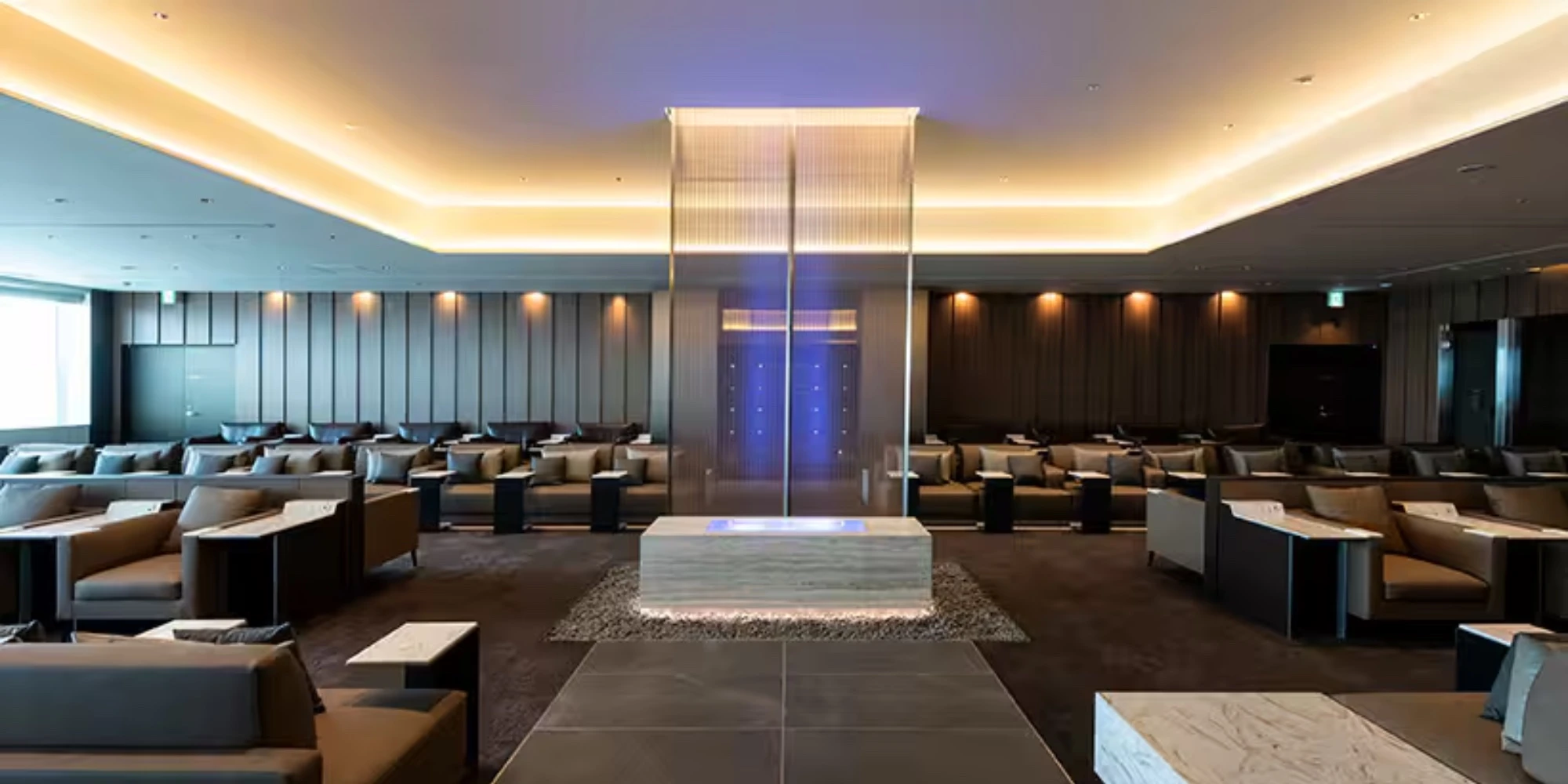
Haneda understands the specific geometry of traveller fatigue. The ANA Suite Lounge serves a full kaiseki meal — multiple seasonal courses presented on ceramic plates — while you watch 787s push back from the glass. For families, Terminal 3 integrates a dedicated play area right near Gate 114 with direct runway views. The design solves for the parents' need to rest and the children's need for stimulation.
At Narita, Terminal 1 offers free, dedicated rest zones with reclining chairs, proving that basic traveller dignity does not have to be locked behind a lounge membership.
Time is your most valuable asset. Here is how to allocate it.
Stay airside. Walk Edo Koji in Haneda Terminal 3. Eat the tsukemen at Rokurinsha. Browse the craft shops. Pull an espresso or a flannel-drip coffee.
From Narita, take the Narita Express to Tokyo Station — fifty-three minutes. Walk the Imperial Palace gardens. Stand for lunch at a sushi bar in Marunouchi. Train back with time to spare.
Haneda advantage. Take the Tokyo Monorail to Hamamatsucho, then the Yamanote Line to Shibuya. Walk the crossing. Eat ramen at Fuunji. Browse Tokyu Hands. Train back, shower at the airport, nap in a capsule.
Narita to Asakusa via the Skyliner — forty minutes. Visit Senso-ji temple. Walk to Ueno. Buy electronics in Akihabara. Eat street food at Ameyoko market. Skyliner back. Sleep at Nine Hours before your flight.
The Tokyo Monorail from Haneda reaches the city in thirteen minutes. The Skyliner from Narita takes thirty-six. Both are immaculate, high-speed, and run every twenty minutes. A taxi from Narita costs two hundred dollars and is never the right answer.
Every airport has a photograph. Changi has the waterfall. Dubai has the gold. Tokyo has the bow.
Stand at the gate window during pushback. Watch the ground crew. As the aircraft begins to move, the entire team will turn, line up, and bow to the departing plane. Not a nod. A full, deep, sustained bow.
This is the photograph that does not look like efficiency. It looks like reverence. It is the moment you understand that in Japan, the act of sending someone on their way is not a job. It is a ceremony.