Singapore Changi has been named the world's best airport more than a dozen times. It is not because the floors are clean or the signs are legible. Every decent airport manages that. It is because Changi was designed by people who understood that an airport is not a building you endure. It is a building you remember.
Most airports exist to process you. Changi exists to host you. The difference is felt the moment you step off the jet bridge: no crush, no chaos, no fluorescent purgatory. Instead, the air is cool, the ceilings are high, and somewhere nearby a thousand butterflies are going about their afternoon in a garden that has no business being inside a terminal.
This is the airport that put a forty-metre waterfall inside a glass cathedral, a swimming pool on a rooftop, and a free cinema next to a koi pond. Because it could. And because in Singapore, functional is never enough: everything must be beautiful too.
If you have a choice of connections through Asia, choose the one that routes through Changi. And if you can, add a few hours to the layover.
A ten-storey glass cathedral.
Built to be the destination.
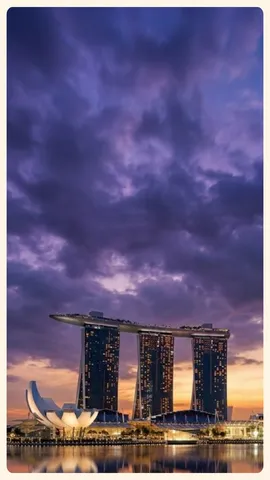
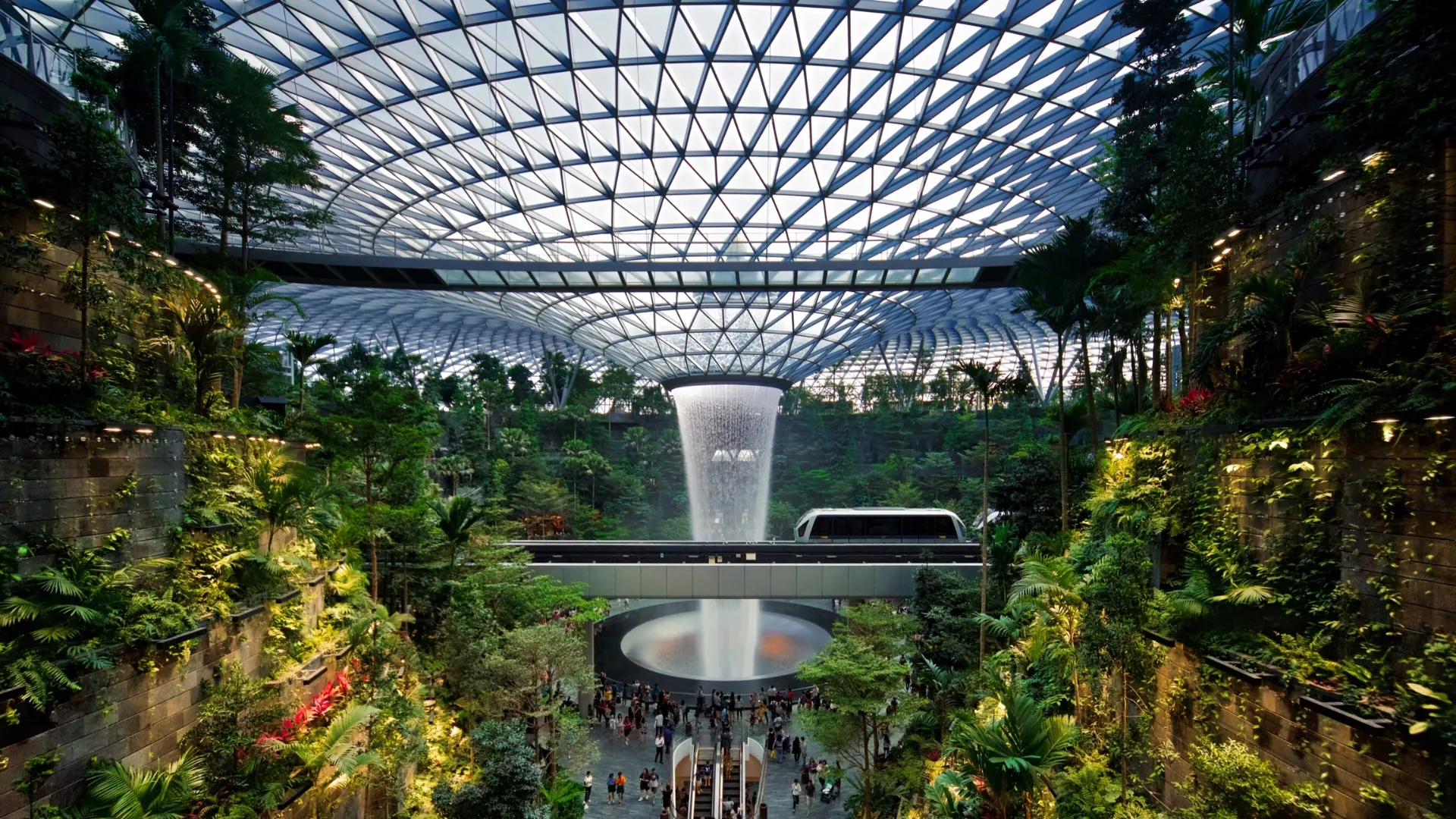
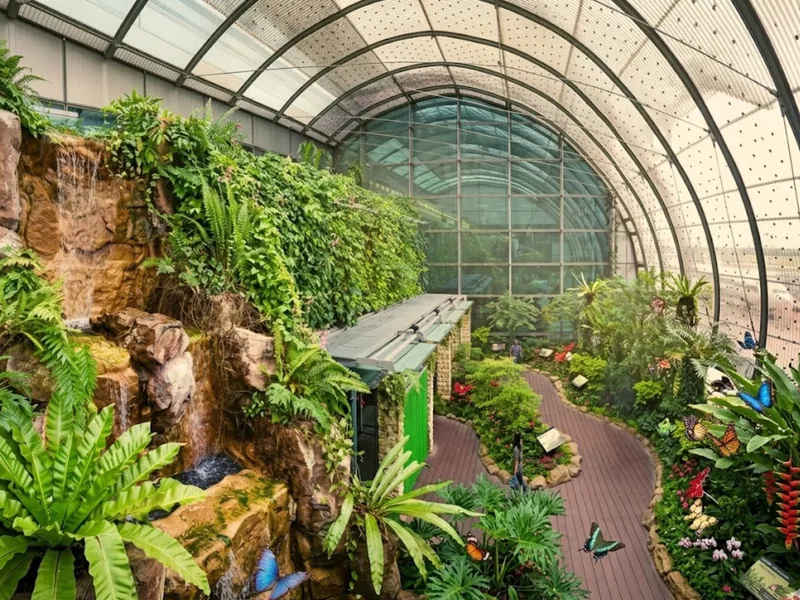
Changi's signature is a building that contains a forest, a waterfall, and forty-six thousand square metres of retail — and sits between the terminals. The Jewel: a ten-storey glass-and-steel cathedral connecting Terminals 1, 2, and 3, designed by Moshe Safdie, the same architect who gave Singapore Marina Bay Sands.
Water falls forty metres from an oculus in the roof. The Rain Vortex is the tallest indoor waterfall on Earth. It is not decoration. Everything else in the Jewel is arranged around it: five storeys of forest, three thousand trees, walking trails that feel more Kyoto than Kallang. At night, projectors turn the cascade into a light show that runs from nine until midnight. The Skytrain between terminals passes above it, giving transit passengers an aerial view without ever leaving airside.
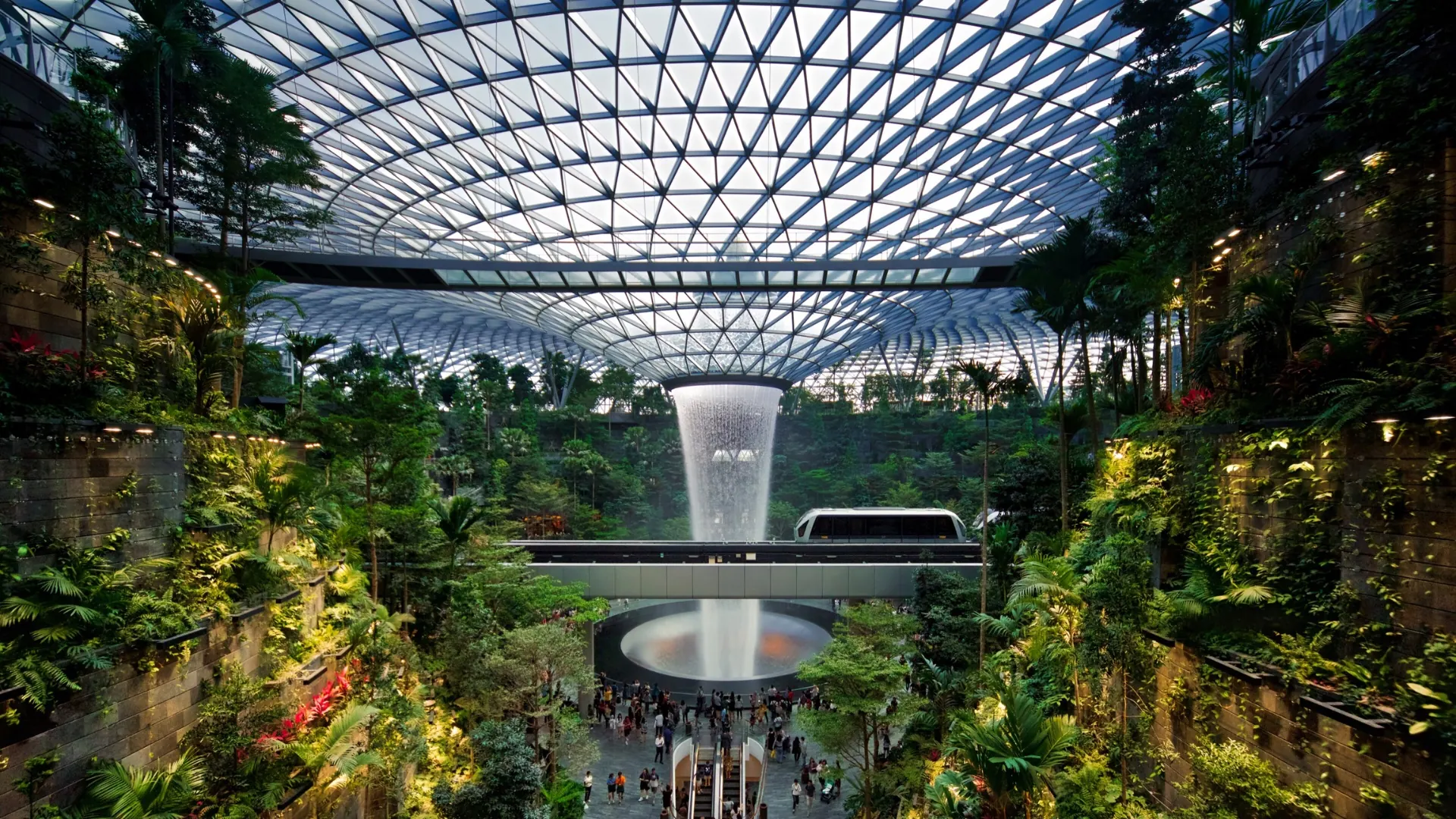
But the Jewel is only the headliner. Terminal 3 hides the world's first airport butterfly garden. A humid, green enclosure where over a thousand tropical butterflies drift between flowering plants and a six-metre grotto waterfall. It is open twenty-four hours. There is nobody checking tickets. You simply walk in, and for a few minutes, you forget you are in an airport.
Above the butterfly garden, a free cinema screens films around the clock. The seats are cushioned, the air conditioning is aggressive, and the selection leans Hollywood. It is not the Cannes Film Festival, but at 2am between flights, a dark room with a movie is exactly what you need.
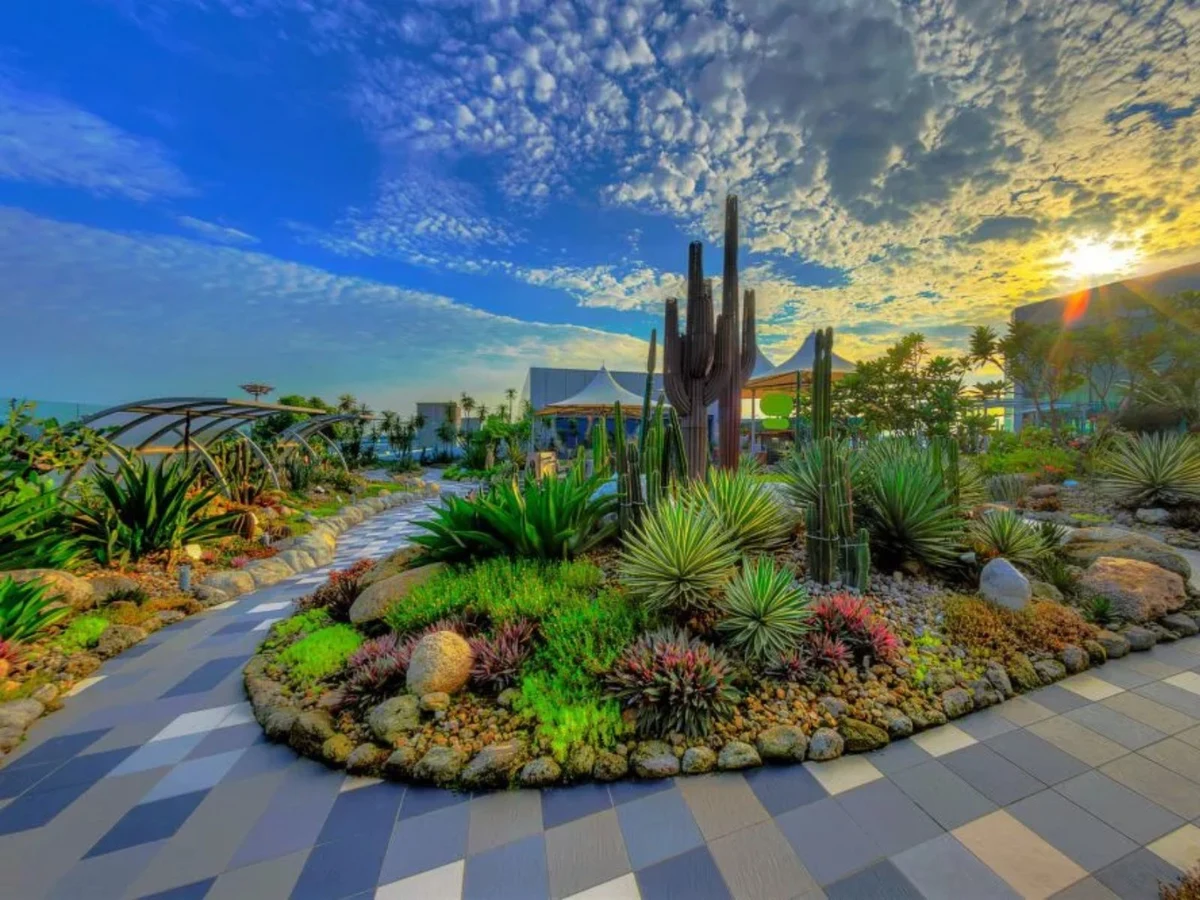
On the roof of Terminal 1, a cactus garden runs along a terrace above the runway. Over a hundred species of succulents and desert plants, a bar in the middle, and an unobstructed sightline to the taxiways. At dusk, with a wide-body rotating in the distance and the sky going orange, it is one of the stranger and better places to spend thirty minutes at any airport on earth.
The secret to eating well at Changi is knowing that the best meal in the airport is not inside the airport. It is in the staff canteen.
Behind Terminal 1, past the arrival hall, across a walkway and into the parking structure, there is a hawker centre built for the people who work at Changi. It is open to the public. It serves chicken rice, bak kut teh, chwee kueh, and carrot cake: the real kind, with preserved radish, not the Western dessert. Anthony Bourdain once called it the best airport food in the world. Two people can eat for five dollars. It is cash only, it closes at ten, and it is the single best meal you will have between flights anywhere on the planet.
If you stay inside the terminals, the food is still remarkable for an airport. In Terminal 1's transit hall, Chatterbox Express brings the hawker scene airside: the legendary Mandarin Chicken Rice, a dish that has captured appetites since 1971, alongside Singapore Curry Chicken, Signature Laksa, and Heritage Kuehs made in collaboration with chef Damian D'Silva of Rempapa. Open from 6am to 2am. In Terminal 4, Crystal Jade GO runs a fast, generous menu of roast bowls, dim sum, wonton noodles, and congee — Cantonese classics at pace, built for passengers running short on time.
In the Jewel, the options multiply. Shake Shack, Jumbo Seafood, A&W for nostalgia, and a food court on the basement level that runs the full spectrum from laksa to bibimbap. But the Jewel is landside. You will need to clear immigration and re-enter, so plan accordingly.
For coffee, find Heaven by Heavenly Wang in Terminal 2. Founded in 1953 along Bugis Street, Heavenly Wang has been brewing kopi since Singapore was still a colony. Dark-roasted robusta, condensed milk, ceramic cup. Order it with kaya butter toast and soft-boiled eggs. The meal costs less than a Starbucks latte and tastes like exactly where you are.
Here is what the seasoned Changi traveller knows that you do not.
First: early check-in. Changi lets you drop your bags up to forty-eight hours before your flight. You arrive in Singapore, check in at the airport, leave your luggage, and spend two days in the city unencumbered. When you return, you walk straight to the gate. No queues, no dragging suitcases through Orchard Road.
Second: the free city tour. If your layover is between five and a half and twenty-four hours, Changi runs complimentary guided bus tours of Singapore. Two routes: one covers the colonial district and Marina Bay, the other hits Chinatown and the Gardens by the Bay. Sign up at the transit lounge in Terminal 2 or 3. Free. Air-conditioned. You will see more of Singapore in two hours than most business travellers see in a week.
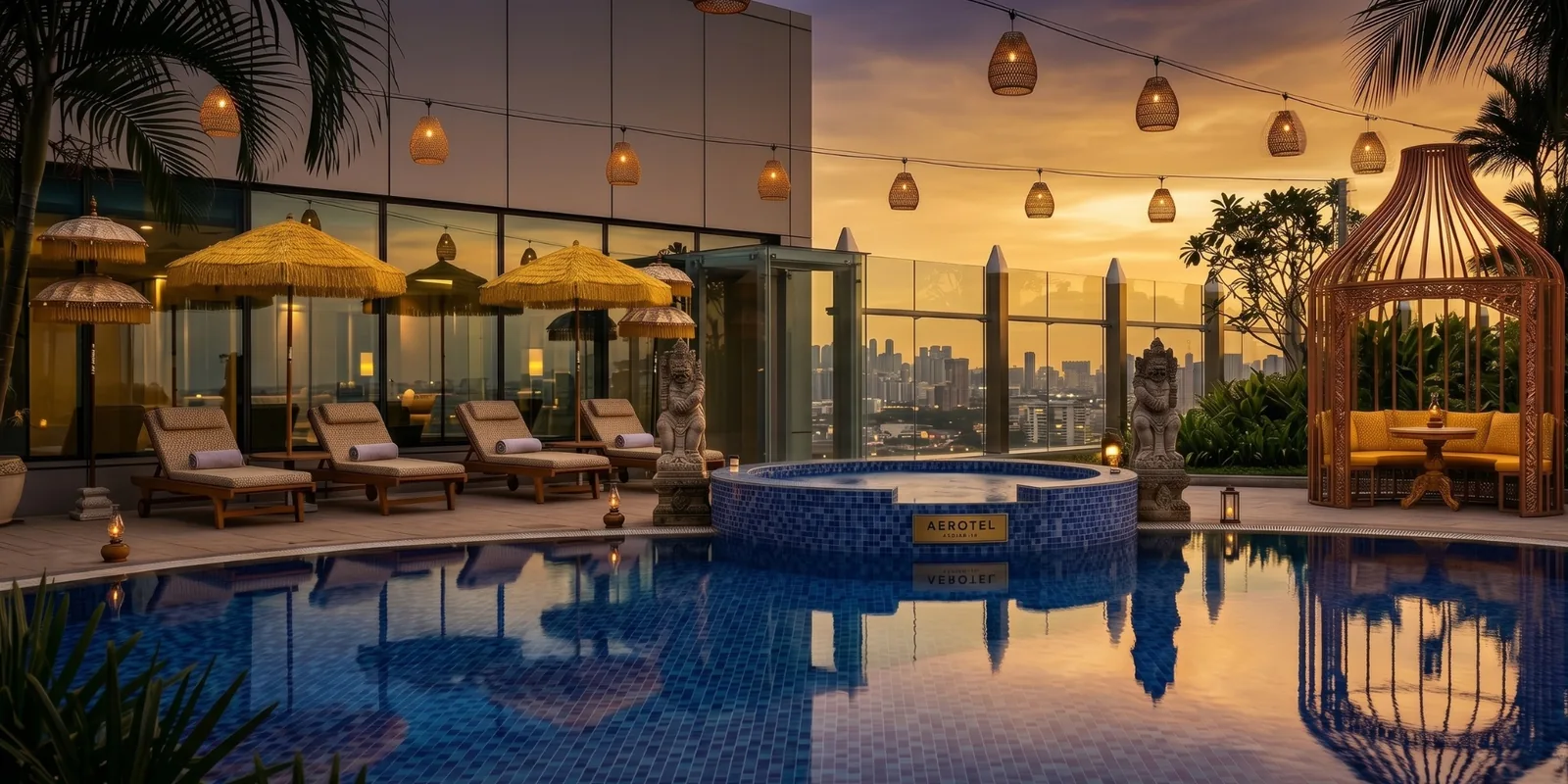
Third: the Aerotel rooftop pool. In Terminal 1, the transit hotel has a Balinese-themed outdoor pool and jacuzzi on the roof, overlooking the tarmac. Transit passengers can pay roughly twenty dollars for pool access without booking a room. Lounge chair, shower, view of taxiing 777s, and the peculiar luxury of swimming at an airport. Opens at noon.
Fourth: Terminal 2's Wonderfall. The fully renovated Terminal 2, reopened November 2023, now features a forty-six-foot LED waterfall display whose tiles mirror real-time weather outside. Every fifteen minutes it runs a synchronised light and sound show. The floor is glass panels over water. It is free, open twenty-four hours, and sits airside where almost no one thinks to look.
Changi understood the layover problem better than any airport on Earth and built the answer into the architecture.
Every terminal has free snooze lounges: reclining chairs in dimmed, quiet zones, open around the clock, no booking required. They are not beds, but at 3am they are close enough. For something more private, the Aerotel transit hotel in Terminal 1 rents rooms by the hour. The Ambassador Transit Hotel spans Terminals 2 and 3 with proper beds, showers, and blackout curtains.
Traveling with children: Terminal 3 has a twelve-metre indoor slide along with an Xbox gaming zone and a free playground. The Jewel's Canopy Park has a hedge maze, a mirror maze, and a suspension bridge twenty-three metres above the ground with a glass floor. Children will not want to leave. Neither, if you are honest, will you.
For the business traveller: the SATS Premier Lounge in Terminal 3 is the consensus pick for quality-to-price ratio. Hot food, proper showers, enough space that you do not feel like you are sharing a living room with two hundred strangers. If you have Priority Pass, several restaurants across all four terminals accept it for set meals, a better deal than most contract lounges.
You have two hours. Or four. Or eight. Or thirteen. Here is what to do.
Stay airside. Skytrain to the Jewel view. Butterfly garden. Free cinema. Kopi from Heaven by Heavenly Wang at T2. Return to gate with the strange sensation of having enjoyed an airport.
Clear immigration. Walk into the Jewel. Canopy Bridge. Shake Shack or Jumbo Seafood. Five storeys of shops. Re-enter transit. Changi immigration is the quickest in Asia.
Free city tour. Heritage route: Chinatown, Merlion Park, Gardens by the Bay. Return for the Aerotel pool, the staff canteen, and a nap in the snooze lounge.
MRT to Marina Bay. Supertree Grove. Chili crab in Chinatown. Train back. Swim. Jewel light show at nine. Movie. Sleep. Wake for your flight feeling like you squeezed a vacation out of a connection.
The MRT runs from Changi to the city centre every few minutes. A taxi costs twenty-five to thirty-five dollars and takes twenty minutes. The airport bus (number 36) is the cheapest option at two dollars but it takes an hour. For most layovers, the MRT is the right answer.
Changi's photograph is the Rain Vortex.
Stand on Level 3 of the Jewel, on the bridge overlooking the waterfall. Switch your phone to 0.5x wide angle. Frame the cascade with the forest canopy on either side and the glass roof above. At night, with the light show running, the water turns violet and gold.
This is the photograph that makes people message you and ask where you are. This is the photograph that does not look like an airport. This is the photograph you will remember long after you have forgotten the flight number, the gate, and the reason you were passing through Singapore in the first place.