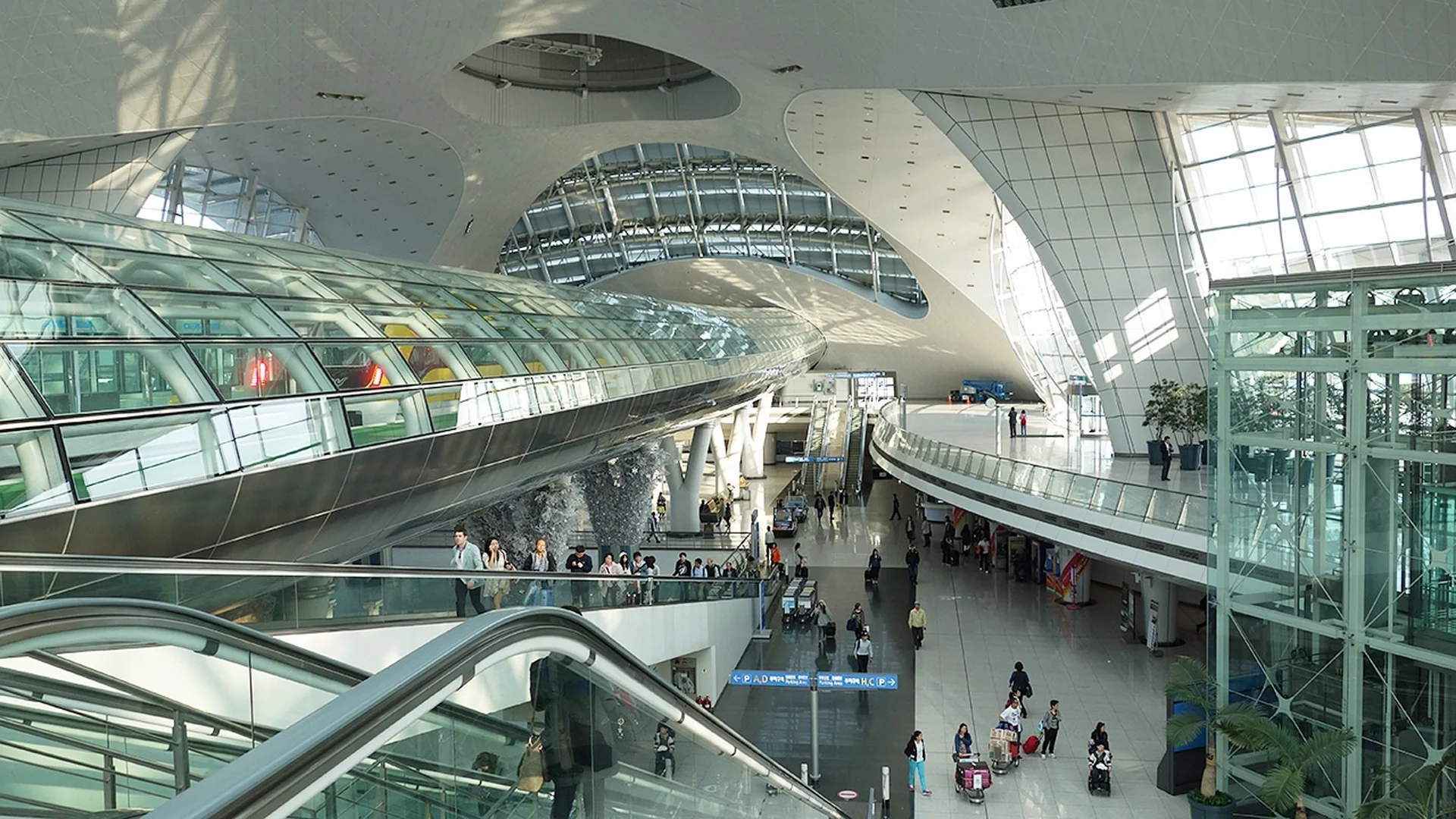
Incheon was built to make a statement. Opening in 2001 on reclaimed land between two islands in the Yellow Sea, it replaced the ageing Gimpo Airport as Korea's definitive gateway to the world. In the twenty-four years since, it has spent most of them at the top of the Skytrax rankings, recognised as the world's best airport so consistently that the trophy has become its wallpaper. As of 2024, it holds Skytrax's five-star rating, its best international transit airport title, and its cleanest airport commendation simultaneously.
The national culture explains the standard. Korea's concept of ppalli ppalli, hurry hurry, produces an airport where arrivals clear in an average of twelve minutes and connections feel frictionless. But beneath the speed sits something deeper: a Confucian instinct for hospitality that is not a policy but a disposition. Staff do not point. They walk you to your gate. Janitors bow. Immigration officers smile. The building is immaculate not because cleaners are scheduled but because the culture finds dirt disrespectful.
The most recent structural development is the consolidation of Terminal 2 into the definitive SkyTeam mega-hub following the Korean Air and Asiana merger, completed through 2026. Two great airlines, one terminal, one of the most connected hubs in northeast Asia.
If you have a connection to make in this part of the world, route through Seoul. The airport will do the rest.
Raised from the sea.
Paced for the future.
Incheon's signature is the scale of what it chose to build.
Terminal 2, designed for the 2018 Winter Olympics and completed through phase four in December 2024, is built as a showcase of soft power. Soaring ceilings and uninterrupted natural light frame one of the largest kinetic media art installations in any airport on Earth, a digital canvas that shifts with the time of day, cycling through imagery drawn from Korean landscape, culture, and abstraction. Stand under it and watch it move. Other airports hang screens. Incheon commissioned art.

The terminal contains seven distinct indoor gardens, ranging from tropical planting to desert succulents, each creating a pocket of silence against the roar of the tarmac. In the transit zone, the Korean Culture Museum offers free daily calligraphy lessons and fittings for a hanbok, the traditional Korean silk garment, in vivid ceremonial greens, reds, and golds. Traditional masque dances and royal court music performances run at scheduled hours near Gate 27 in Terminal 1 and the central gates of Terminal 2. You can watch a twelfth-century dance form being performed thirty metres from a departure queue.
In the basement of the Transportation Center, a CGV cinema runs new releases daily from nine in the morning to eleven at night, with films available in seven languages. Next to it, a synthetic ice rink is open year-round and costs around four thousand won for adults, skates included. There is also a K-pop experience zone with free dance classes. Other airports have amenities. Incheon has a curriculum.
The duty-free zone completes the picture. The footprint given to K-beauty: Innisfree, Etude, IOPE, Sulwhasoo, in counters that stretch the full width of the transit hall, turns the concourse into a destination for skincare alone. The first Louis Vuitton store ever opened inside an airport is here.


The secret to eating well at Incheon is that the airport food is not a compromise. It is Korean food, made by Korean restaurants, and some of them have been worth queuing for long before they opened a terminal branch.
The noodle restaurant near Gate 31 on the third floor of Terminal 1 is a branch of Hwangsaengga Kalguksu, the Samcheong-dong original that has been selected for nine consecutive years as a restaurant worth queuing for. The beef bone kalguksu is clean and soft, the broth slow-drawn. Order the King Dumpling alongside it.
On the fourth floor of Terminal 1, JaYeon is the airport's only distinguished Korean restaurant, operating in the tradition of Walkerhill's formal dining. Spicy Korean-style beef soup, cold noodles in chilled or spicy broth, clear beef soup with Korean dropwort. Properly plated. Open from six in the morning.
In Terminal 2's basement, Jeondongjib carries three generations of a family business that started in Sinpo-dong, Incheon in 1957. Spicy boneless monkfish bulgogi set and grilled samgyeopsal ssambap. One floor up, near Gate 249, Hyoja Gomtang runs around the clock: fresh beef boiled into a clear, warming gomtang, served with homemade kimchi and freshly cooked rice. The right answer at any hour.
For coffee, Hollys Coffee on the fourth floor of Terminal 1 is Korea's premium coffee chain, open from six in the morning. Proper espresso, Jeju Matcha Latte, baked pastries. Skip the international chains.
Here is what the seasoned Incheon traveller knows that you do not.
First: the Spa on Air. In the basement of Terminal 1, east side, a genuine jjimjilbang operates twenty-four hours a day. Around twenty dollars buys access to hot soaking pools, a sauna, cold plunge pools, private sleeping rooms, and shower cubicles with shampoo and body wash provided. The communal sleeping rooms have mats. The private rooms have beds. This is not a spa in the airport branding sense. It is an actual Korean bathhouse that happens to be airside, and it is the most effective twenty dollars you will spend in any timezone.
Second: the free transit showers. Separate from the Spa on Air, Incheon provides free shower facilities at four locations across both terminals, in the duty-free transit zone. Shampoo, body wash, and hair dryers are provided. Bring your own towel, or buy one at the duty-free near Gate 12. No booking, no fee, no lounge access required. This is for every transit passenger, regardless of class or airline.
Third: the free transit tours. Eligible international transit passengers can join complimentary guided bus tours of Seoul and the surrounding area, departing from the terminal and returning in time for the next flight. Routes include temple districts, Songdo, Hongdae, and Gyeongbokgung Palace. Book in person at the transit tour desk. First come, first served. For a layover long enough to clear immigration, this is the most structured way to see Korea without planning anything yourself.
Fourth: the sleeping zones. The terminal is lined with dedicated free rest areas featuring ergonomic reclining chairs in dimmed, quiet sections. The Walkerhill Transit Hotel inside security rents soundproofed rooms by the hour for passengers who need full privacy. Both exist because Incheon treats the overnight layover as an architectural problem to be solved, not an inconvenience to be tolerated.
Incheon treats the long layover as a design requirement. The result is an airport where the question is not how to survive a six-hour connection but how to use it.
For sleep, the free reclining rest zones are spread throughout both terminals, in dimmed quiet areas, with no booking and no fee. For more privacy, the Walkerhill Transit Hotel rents hourly rooms inside security with proper beds, blackout curtains, and shower facilities at Gate 11 in Terminal 1 and Gate 252 in Terminal 2. For the full reset, the Spa on Air in the Terminal 1 basement runs around the clock and combines a sleeping room with a bathhouse visit for the price of a meal in most airport restaurants.
For families, the airport's indoor gardens and K-pop dance experience zones keep children occupied with genuine engagement rather than waiting-area furniture. The synthetic ice rink in the Transportation Center basement costs around four thousand won for any age. There are prayer rooms, baby care rooms, and a twenty-four-hour hospital with emergency, dental, and general care in both terminals.
The Korean Air First Class Lounge and the Matina Lounges anchor the premium tier, with massive buffets, shower suites, and rest rooms. The Matina Lounges accept Priority Pass and offer the best quality-to-walk-in-price ratio in the complex. For passengers without lounge access, the sheer quality of the terminal's public spaces means the gap between lounge and concourse is smaller here than almost anywhere else on Earth.

You have two hours. Or four. Or eight. Or thirteen. Here is what to do.
Stay airside. Twenty minutes in the Spa on Air. Hwangsaengga Kalguksu near Gate 31 for beef bone noodles. Walk the indoor gardens. Watch the kinetic art wall move through its cycle. Return to the gate genuinely reset.
Still airside. Hanbok fitting at the Korean Culture Museum. JaYeon on 4F for cold noodles or beef soup. CGV cinema if there is something showing. Honey butter chips from duty-free on the way back. The airport is enough.
AREX express to Seoul Station in forty-three minutes. Gyeongbokgung Palace and the alleys of Bukchon Hanok Village. Street food in Insadong. Train back with an hour to clear immigration and reach the gate.
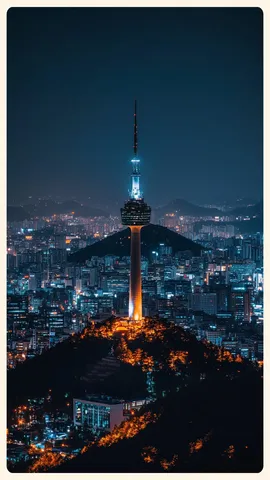
AREX to Seoul. Myeongdong for K-beauty shopping done properly. Namsan Tower for the view. Korean BBQ in Gangnam for dinner. Train back. Spa on Air. Sleep. Board the next flight feeling like you had a day in Korea. Because you did.
The AREX express runs from Incheon to Seoul Station in forty-three minutes for nine dollars. The all-stop commuter train takes fifty-six minutes for around four dollars. Taxis take longer and cost around seventy dollars in traffic. The express train is the right answer for most layovers. Buy a T-money card at the station for seamless transfers to the Seoul Metro on arrival.
Incheon's photograph is the hanbok against the glass.
Find the Korean Culture Museum in the transit zone. Wait for the moment a passenger is standing in a fitted hanbok, vivid ceremonial silk in deep green and red and gold, framed against the floor-to-ceiling windows of the terminal with a Korean Air aircraft pushing back on the tarmac behind them. Switch to 0.5x wide angle. Frame it all: the silk, the glass, the aircraft, the grey morning light coming off the Yellow Sea.
This is the photograph that does not look like an airport. Silk and steel. A dynasty and a departure gate. A country that built itself into one of the wealthiest economies on Earth in fifty years and still takes the time to teach a stranger how to tie a traditional knot before their flight. Korea in one frame.