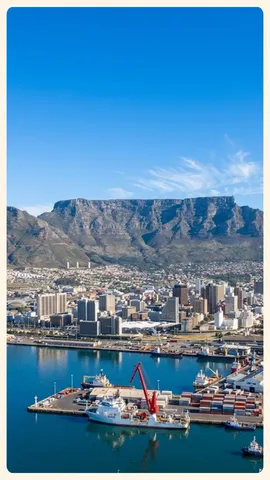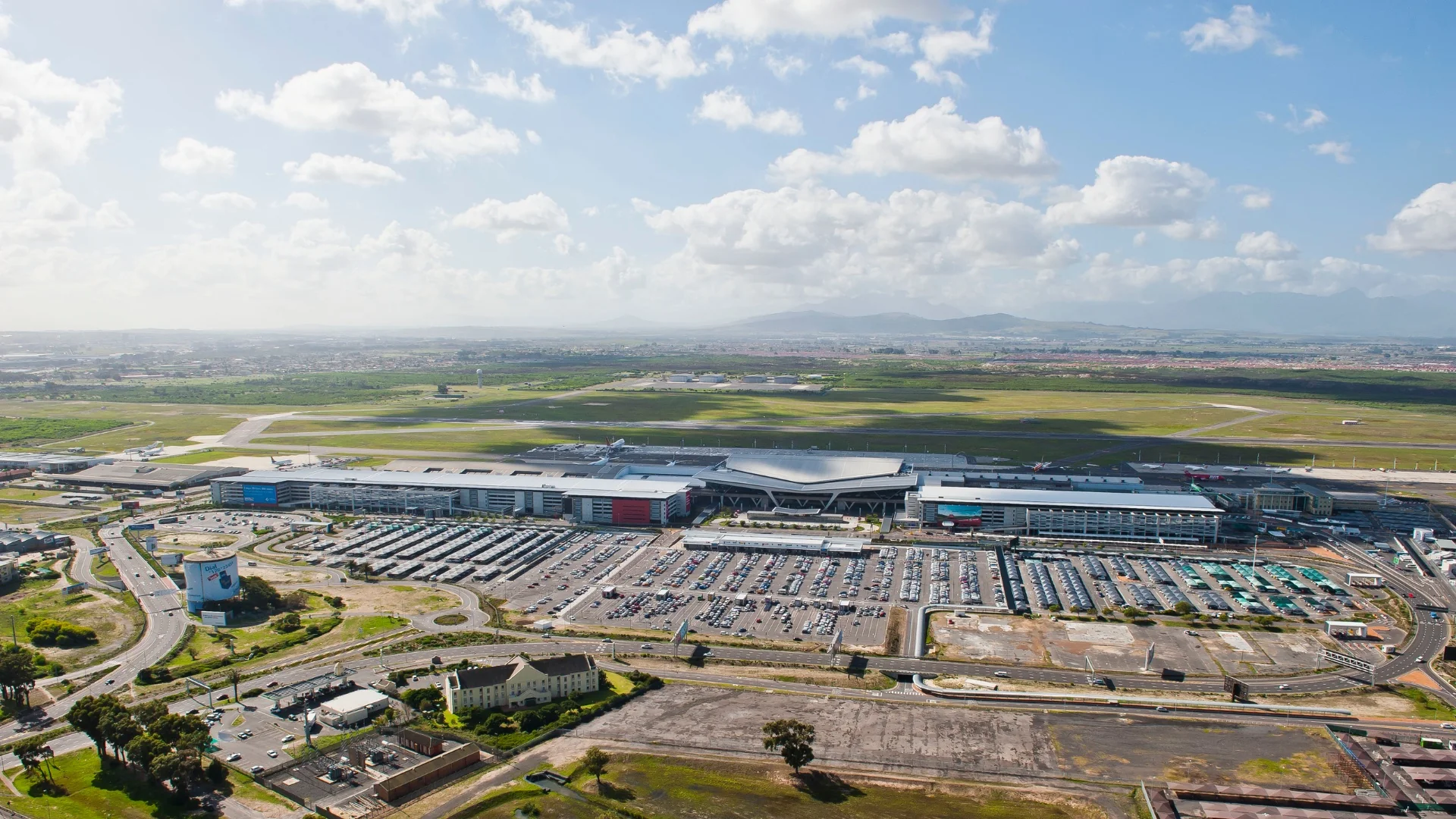
Cape Town decided otherwise. Dropped ceilings, recirculated air, identical gates. The specific geography of the place is considered irrelevant to the business of moving passengers. Cape Town decided otherwise. The entire Central Terminal Building was oriented and glazed so that the mountain range you came to see fills the glass the moment you clear security. Devil's Peak. The flat top of Table Mountain. The Twelve Apostles beyond it. Not through a porthole. Through a full-height curtain wall that turns the terminal into a frame.
This is not incidental. You do not accidentally end up at the bottom of the African continent. Cape Town is not a hub. It is a terminus, a deliberate destination at the edge of where flights go. The airport understood that fact and built accordingly. Other airports show you a departures board. Cape Town shows you why you came.
In 2025 the airport handled 11.1 million passengers and was ranked the best airport in the world by AirHelp. It runs at 90.42% on-time performance. It is not the biggest airport in Africa. It is the most correct one.
Route through here. Add time. The mountain will still be there when you land.
A glass wall at the edge of the world.
Built to frame the mountain.
Cape Town's signature is the glass wall.
Stand at the level 3 restaurant deck and look outward across the runway. The curtain wall columns frame the view at regular intervals. Between them: Devil's Peak, the flat-topped plateau of Table Mountain, and on clear days the spine of the Cape Fold Mountains. Aircraft push back three floors below. The mountain does not move. This is what the airport considers the correct view from a departure lounge.

In the International Arrivals Hall, the Flying Madiba hangs above the meeters-and-greeters zone. Six by three metres: a woven silhouette of Mandela filled with stars, flying over a South African landscape. Czech artist Peter Sis designed it; Atelier Pinton wove it in France. Bono, Sting, John Legend, Peter Gabriel, and Yoko Ono funded it through Art for Amnesty. Every international arrival walks beneath it before passport control.
On the departures concourse, a life-size bronze bull elephant stands unbarricaded on the floor. You can put your hand on its flank. The airport did not fence it off. Cold bronze, the specific weight of Africa, before you board a flight over it.
Hotel Verde is a four-minute walk from the terminal: 151 rooms, LEED Platinum (first in Africa), vertical wind turbines on the roof, a chemical-free eco-pool surrounded by indigenous wetlands, and every plant tagged with a QR code linking to its botanical description.


The secret to eating well at Cape Town International is to eat what South Africans actually eat. Not an airport interpretation. The real thing.
Find Ocean Basket on the level 3 restaurant deck. This is South Africa's most beloved casual seafood chain, and the airport version is the same restaurant you would eat at on a Friday night in Cape Town. Order the Famous Fish and Chips or a pan of garlic butter prawns. A large plate of fried hake and calamari costs around two hundred rand. The dining room smells of lemon and sea salt. It is loud because it is full. You eat it quickly because you have a gate to catch, and because it is exactly right, and because in Cape Town the sea is never more than a few kilometres away and the food knows it.
Mugg & Bean, also on the restaurant level, is the correct choice before a morning flight. Skip everything else on the menu. Order the Giant Muffin and a bottomless filter coffee. The mug is heavy, the coffee is refilled without asking, and the caloric density will carry you through a twelve-hour flight to Europe.
On the fourth floor, past the lounges, there is a Woolworths Food store. Buy biltong: sliced beef, dried and spiced. Buy droëwors too, if you have room. Biltong and droëwors are not airport snacks. They are what South Africans carry when they travel, and nothing from any international terminal kiosk comes close.
For coffee, find a Vida e Caffè. Order an Estrela. The barista will call your order in Portuguese. The espresso is dark and uncompromising and tastes like Cape Town on a Tuesday morning when the southeasterly is coming in off False Bay.
Here is what the seasoned Cape Town traveller knows that you do not.
First: the Woolworths wine move. Before you reach departures, find the Woolworths Food store on the fourth floor. Buy a bottle of Stellenbosch Pinotage or a Franschhoek Chenin Blanc at standard grocery store prices. Pack it in your checked luggage. The wine you are considering in the duty-free shop past security is the same wine for fifty percent more. South Africa grows some of the best wine on earth and the airport supermarket sells it at what it actually costs.
Second: the Bidvest Premier Lounge is the correct paid-access option. The international lounge is airside, immediately after passport control, open 05:00 to 23:00, Priority Pass and pay-at-door accepted, showers included, three-hour maximum. The SLOW Lounge in the domestic terminal is finer (library, spa, à la carte, Cape Dutch interior) but restricted to FNB Premier bank cardholders. If you do not have that card, the Bidvest is the answer.
Third: Hotel Verde does not require an overnight booking to walk the grounds. The wetland trail, beehives, and eco-pool are a four-minute walk from the terminal. Leave the concrete. Sit by a chemical-free pool in Cape fynbos. Walk back and board.
Fourth: there is no rail link to Cape Town city centre. The only public option is the MyCiti A01 bus to the Civic Centre: every twenty minutes, 05:00 to 21:30, around ninety rand. For most passengers, Uber or Bolt from Parkade 2 costs R200 to R350 and takes twenty to thirty minutes depending on traffic.
The worst thing about a long layover is the slow erosion of your dignity. The stiff neck, the dead phone, the fluorescent hum. Cape Town's answer is a four-minute walk and a chemical-free pool.
Hotel Verde is the layover solution. Four hundred metres from the terminal, LEED Platinum, carbon neutral, day rooms available. The rooms are soundproofed: you do not hear the runway. The restaurant uses organic produce. The Verde Vita Spa offers massages. For passengers arriving red-eye from Europe who need a bed before a domestic connection, it runs at premium city hotel standards four minutes from check-in.
For families, Hotel Verde offers what the terminal cannot: a walking trail among beehives and indigenous planting where children can move freely in open air.
The Bidvest Premier Lounge in the International Terminal is open until 23:00 and accepts pay-at-door entry. Quiet workstations, strong Wi-Fi, an open buffet of food and drinks, and showers. For domestic passengers holding an FNB Premier bank card, the SLOW Lounge operates at a different level entirely: à la carte food, a library, a spa, Pinotage on the drinks list, a Cape Dutch interior, and a noise level low enough that you can actually think.

You have two hours. Or four. Or eight. Or thirteen. Here is what to do.
Stay airside. Touch the elephant. Ocean Basket: garlic prawns. Woolworths: biltong. Vida Estrela.
Walk to Hotel Verde. Four minutes. Wetland trail, beehives, eco-pool. Walk back. Use muscles that have been in a seat for twelve hours.
Uber to V&A Waterfront, R200–250, twenty minutes. Zeitz MOCAA (Heatherwick Studio grain silos, nine floors of African art, 270-degree mountain views from level six). Harbour lunch. Uber back.
Uber to the Table Mountain Aerial Cableway. Book ahead. The cable car rotates as it climbs. From the summit: False Bay one side, Atlantic the other, city between. Lunch in Camps Bay. Uber back.
MyCiti A01 bus to Civic Centre: every twenty minutes, 05:00 to 21:30, around R90, thirty minutes. Myconnect card required, buy at the kiosk for R35. Uber or Bolt from Parkade 2: R200–350, twenty to thirty minutes. There is no rail link to Cape Town.
Cape Town's photograph is the mountain through the glass.
Stand at the level 3 restaurant deck, face the runway. The curtain wall columns frame the glass in regular intervals. Between them: Devil's Peak, the flat top of Table Mountain. Switch to 0.5x. Frame the full height of the glass wall, columns left and right, mountain centred, aircraft three floors below.
This is the photograph that does not look like an airport. The photograph makes the argument for it.